Categories

Showing posts with label Places. Show all posts

Friday, August 12, 2016

Most Beautiful Places

Fjaðrárgljúfur Canyon – Iceland


Fjaðrárgljúfur Canyon

Fjaðrárgljúfur is a canyon in south east Iceland which is up to 100 m deep and about 2 kilometres long, with the Fjaðrá river flowing through it. It is located near the Ring Road, not far from the village of Kirkjubæjarklaustur.The canyon was created by progressive erosion by flowing water from glaciers through the rocks and palagonite over millennia.

Amazing Places Must See Once in Life

The Gardens at Marqueyssac, Vézac, France

Most Dangerous Cities in the Philippines

Manila


by:  
http://toplistnetwork.com/


Photo source: flickr.com/reynocum


Manila is not only one of the overpopulated cities in the world. According to an articlepublished by the Philippine Star, Manila’s transport system is one of the most dangerous for women in the world. It is also the seventh worst city where women don’t feel safe to travel alone at night.

In 2011, Manila was listed as one of the most dangerous cities for journalists in the world. The list also included Cebu and Cagayan de Oro – all the killings and harassments wereattributed to the “paramilitary groups and private militias responsible were classified as ‘Predators of Press Freedom’”.

In the Brown-Wilson Group’s “2009: The Year of Outsourcing Dangerously.” Manila, Makati, and Cebu were ranked seventh. The risks include terrorism, diseases, and natural disasters.

Manila was also ranked 4th of the world’s most susceptible cities to natural hazards. They attribute this susceptibility to the “poor institutional and societal capacity to manage, respond and recover from natural hazards events.” This city was also second to Japanese cities, Tokyo and Yokohama, “due to both seismic activity and typhoon frequency” based on 2013 Swiss Reinsurance report. It was also ranked second of New York Post’s “The 10 Riskiest Cities to Live In”.

Manila also had the highest number of firecracker-related injuries from 2010-2012, according to the list released by the Department of Health.

Dangerous Places

Java and Sumatra – Indonesia


raja-ampat-islands
  • Natural disasters are incredibly common here, including floods, droughts, earthquakes, landslides volcanoes and tsunamis
  • One particular tsunami in 2004 killed over 227,000 people following a magnitude 9.1 earthquake caused an enormous wave to hit the shore
  • For the last 100 years, there have been droughts, volcano eruptions and earthquakes galore – a risky place to decide to live in

The Great Wall of China

The Great Wall of China


by: Rank Red
http://www.rankred.com/
The Great Wall of China
The Great Wall of China is a series of fortification made of stone and other earth materials. Although it was constructed in several phases, and later joined which was eventually known as the Great Wall, but the most famous one is the wall, built by Qin Shi Huang, the first Emperor of China in 220-206 BC. It is built on east to west line across the northern border of china to protect the Chinese empire from nomadic groups from the far northern steppe. It is one of the Seven Wonders of the World and can be seen from the moon.

Historical Places in the Philippines

Historical Places in the Philippines

by Jane Dacumos on July 25, 2013


Known to be the “the Rock”, Corregidor is known for its important historical attractions. When the Japanese invaded the Philippines, Corregidor became the headquarters of the Allied Forces and also the seat of Philippine Commonwealth government. The huge firearms of Corregidor which are used in support for Filipino and American defenders of Bataan are now silent but the damage seen on buildings, structures, and tunnels in the island continues on telling a very moving story of a war that has claimed so many lives. A visit to this former 


Wonderful Historic Monuments


Wat Phra Si Sanphet, Thailand


by: Tourism Thailand
http://www.tourismthailand.org/

Top 10 Wonderful Historic Monuments


Wat Phra Sri Sanphet is located in Pratu Chai subdistrict, Phra Nakorn Si Ayutthaya district, Ayutthaya province. The temple is not only a significant historical site, but also considered as the spiritual center of Thais for a long time. Situated within the royal palace grounds, Wat Phra Sri Sanphet is the royal monastery and therefore no monk is allowed to reside at. However, the temple served to conduct ceremonies within the royal court, such as the ritual to drink an oath of allegiance. It is also regarded as an equivalence of Wat Mahathat in Sukhothai and a model for Wat Phra Sri Ratana Sasadaram (the royal temple of the Emerald Buddha) or Wat Phra Kaew in Bangkok.

Somdet Phra Ramathibodi I or King U-thong commanded the construction of his royal house in this area, but when Somdet Phra Borom Tilokkanat succeeded the throne, the king considered moving the royal palace further north and converting the piece of land into a sacred ground which later became this temple. During the reign of Ramathibodi II, an enormous Buddha image was cast. The Buddha image of “Phra Sri Sanphetdayan” is 16 meters high and its surface is coated with 143 kilograms of gold. It had been enshrined inside the assembly hall until the fall of Ayutthaya in 1767 when the Burmese invaded and melted the gilded gold away. The Buddha image was seriously damaged, so in the Rattanakosin period Phra Bat Somdet Phra Buddha Yodfa Chulaloke installed the broken core of Phra Sri Sanphetdayan in a pagoda inside Wat Phra Chetupon Vimolmangkalararm Rajvoramahaviharn in Bangkok and named the pagoda “Chedi Sri Sanphetdayan”.

Somdet Phrachaoyuhua Borommakot was the first to command the temple restoration. During the reign of Phrabat Somdet Phra Chulachomklao Chao Yuhua (King Rama V), Phraya Boran Rachathanin the regional intendant found a considerably large collection of artifacts in the underground chamber of the pagoda, for example Buddha images and gold ornaments. Later Field Marshal P. Piboonsongkram assigned a committee to renovate the ruins until the temple regained its current condition.

This royal monastery plays an important role in history of art and archeology. The remaining debris still evidently portrays how glorious the country was. At the heart of the temple, there are three adjacent Ceylonese (or bell-shaped) pagodas situated on rectangular platforms. It is believed that these platforms were the base of royal houses in the Ayutthaya period. Currently, the temple is regarded as the symbol of Ayutthaya province.

Wonderful Historic Monuments


 Machu Picchu, Peru.

link: http://www.peru-machu-picchu.com/index.php

Machu Picchu

7,000 feet above sea level and nestled on a small hilltop between the Andean Mountain Range, the majestic city soars above the Urabamba Valley below. The Incan built structure has been deemed the “Lost Cities”, unknown until its relatively recent discovery in 1911. Archaeologists estimate that approximately 1200 people could have lived in the area, though many theorize it was most likely a retreat for Incan rulers. Due to it’s isolation from the rest of Peru, living in the area full time would require traveling great distances just to reach the nearest village.

Separated into three areas - agricultural, urban, and religious - the structures are arranged so that the function of the buildings matches the form of their surroundings. The agricultural terracing and aqueducts take advantage of the natural slopes; the lower areas contain buildings occupied by farmers and teachers, and the most important religious areas are located at the crest of the hill, overlooking the lush Urubamba Valley thousands of feet below.

Hikers, tourists, and the early explorers describe similar emotions as they climb their way through the Inca Trail. Many call the experience magical. Glancing out from the Funerary Rock Hut on all the temples, fields, terraces, and baths seems to take you to another time. Blending in with the hillside itself, many say the area creates a seamless and elegant green paradise, making it a must for anyone who travels to Peru.

Thursday, August 11, 2016

HISTORICAL SITES IN THE WORLD

Taj Mahal


by: Nomadic Matt
http://www.nomadicmatt.com/
Taj Mahal, Agra, India, marble tomb built for Emperor Shah Jahan’s deceased wife, UNESCO
Built in the 1600s, this building in Agra, India, is a testament to undying love. This white marble tomb built for Emperor Shah Jahan’s deceased wife is a must-see for everyone. In 1983, it was named a UNESCO World Heritage site, and also has been named one of the New Seven Wonders of the World. The Taj sees between two and four million tourists annually, so there have been recent restrictions on tourism in an effort to help protect the site. However, the greatest threat is the air pollution that is destroying the marble.

HISTORICAL SITES IN THE WORLD


HISTORICAL SITES IN THE WORLD


by: Nomadic Matt
http://www.nomadicmatt.com/

Parthenon in Athens, Greece

The world is filled with mind-blowing to things to see, both natural and man-made. There are so many breathtaking and incredible historical sites built by ancient civilizations, it’s sometimes hard to narrow down which are the best. Think of all the lists of historical wonders out there and how different they are sometimes. Everyone has their own, including me.
Below are my favorite historical sites that I think every traveler should try to visit at some point (or don’t. That’s up to you but I think you should). The story these ruins tell is part of humanity’s story, and that is why I love them the best.

Thursday, August 4, 2016

Historical Places in the Philippines

Historical Places in the Philippines

by Jane Dacumos on July 25, 2013

Top 10 Historical Places in the Philippines


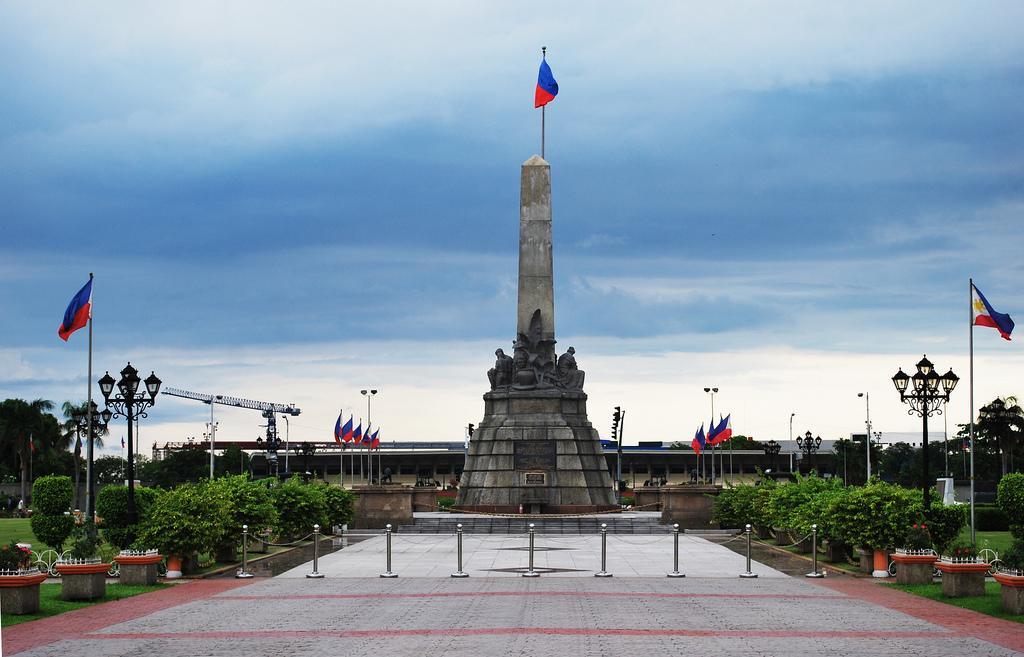
Previously called Bagumbayan Field, Rizal Park or Luneta Park was built as a tribute to our greatest national hero – Dr. Jose Rizal. It is one of the leading historical sites in the Philippines where Rizal was executed by the Spanish military firing squad on December 30, 1896 because he had spread the ideals of revolution against Spanish rule.